Independent sourcing partner

Source apparel fabrics using arvind as a reference, not as mill identity

LoomPilot Procurement helps US business buyers turn a reference search into a comparable material brief. The service is not arvind and has no affiliation with or authorization from that brand. A measured query names a starting point; it does not prove stock, genuine branded lots, or equivalent constructions.
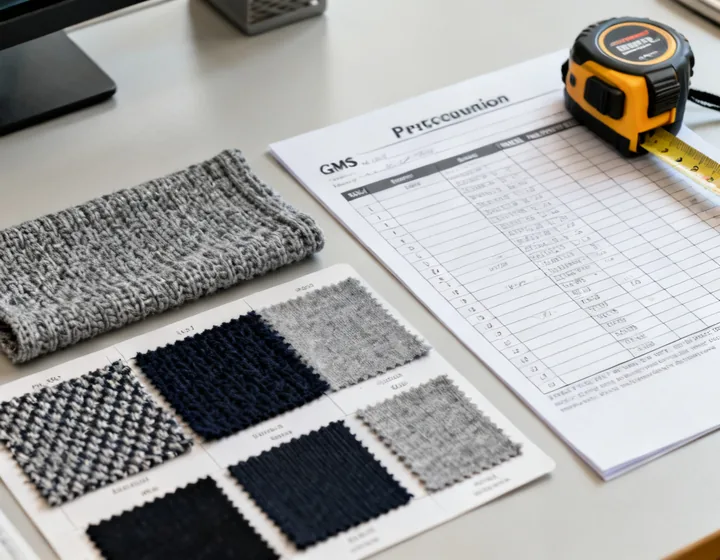
Apparel fabric swatches and a specification worksheet on a sourcing desk

Before an RFQ

  • Application and fiber content for the garment or conversion program
  • GSM and usable width with the tolerance the cutter can accept
  • Finish, quantity with unit, and US destination
Send a fabric brief

Agree the specification before comparing factories

Buyers who arrive from an arvind search still need measurable fields. Color names, mill nicknames and fabric-family labels are not enough to compare wholesale quotations. Record what is known, and keep unknowns visible so a mill cannot fill them with an unstated substitution.

GSM and width
State target, tolerance and whether width is cuttable usable width or loomstate greige width. Yield changes when the quoted width is smaller than the marker plan.
Color
Identify the approved reference: retained swatch, lab dip, or numeric color standard. A brand-adjacent color story is not an acceptance document.
Composition and construction
Write fiber percentages, weave or knit, yarn count if known, and stretch. Ask the proposed mill to mark every deviation instead of treating a nearby twill as the same article.

Choose by procurement task

Inquiry cards on this site are generic apparel-fabric configurations. They are not arvind inventory, licensed collections, or verified equivalents. Use them to start a brief, then confirm the exact article with samples.

  1. Match an existing swatch: send composition, construction, GSM, usable width and the retained piece.
  2. Develop a finish: separate greige, dyeing, printing, coating and final hand so quotations list inclusions.
  3. Compare bulk options: hold quantity, packaging, freight, sampling charges and payment terms on the same basis.

Open inquiry configurations for woven, knitted, and shirting families.

Evidence ledger

Supplier files stay attached to a named article. A mill certificate, test title or marketing PDF is not a site credential and is not proof that a substitute matches the reference brand.

Supplier
Legal entity and role for this order: mill, converter or trader. The relationship is confirmed per RFQ, not inherited from a search term.
Report
Method, edition, specimen, conditioning, laboratory, date and the exact material reference. An ASTM or AATCC method name without those bindings is not a result.
Approval
Named swatch, lab dip or strike-off version, reviewer and permitted deviation. Bulk lots need a separate sampling plan.

Separate each approval

Sample stages are process notes, not lead-time guarantees. A stock cutting can screen hand; it does not approve a dye lot.

Stage Record Owner
Clarify the brief Written specification version Buyer signs the open fields
Compare suppliers Same scope, marked exceptions Sourcing desk coordinates replies
Approve the sample Article identity and decision date Buyer or nominated technician
Agree bulk checks Sampling and defect rules Confirm in writing before shipment

Begin with the use case

Apparel fabrics face wash, abrasion, sewing and next-to-skin conditions that upholstery or outdoor cloth do not share. State the garment category before asking mills to quote a cotton or denim construction.

Duty
Wear, industrial laundry, light outdoor exposure or conversion into trims. Each duty changes shrinkage, colorfastness and finish questions.
Acceptance
Method and target agreed by the buyer. Do not treat a mill in-house test as interchangeable with the buyer’s nominated method.

Clarify the unknowns

What product requirements should the buyer prepare?
Material family, composition, construction, GSM, usable width, color, finish, quantity with unit, US destination, sample stage and which documents must travel with the quoted article.
How does independent supplier matching work?
The desk collects one brief, requests factory quotations against that brief, and flags deviations. Matching is coordination, not mill ownership or authorized distribution.
How should quotations be compared?
Compare price only after composition, construction, weight, usable width, finish, quantity, packaging, freight, duties, sampling charges, testing and payment terms share the same basis. A lower unit figure that omits those lines is not a verified saving.

Discuss the brief

Share open specifications and the decisions already made. LoomPilot Procurement will coordinate factory quotes for the same written scope. No lowest-price or fixed-saving figure is published.

Send a fabric brief